

Winter Cycling: Practical Tips and Heated Clothing
Share
Winter Cycling: Practical Tips and Heated Clothing
Cycling in winter requires more planning than riding in mild weather. Cold, wind and rain can quickly reduce comfort. The right layers, protection for hands and feet, and optionally heated clothing as an additional heat source can help you adapt your outfit to the route and conditions.
1. Dress in layers
Use a moisture-managing base layer, an insulating mid-layer and a wind-resistant or water-repellent outer layer. Avoid combinations that restrict movement or cause excessive sweating.
2. Add targeted heat
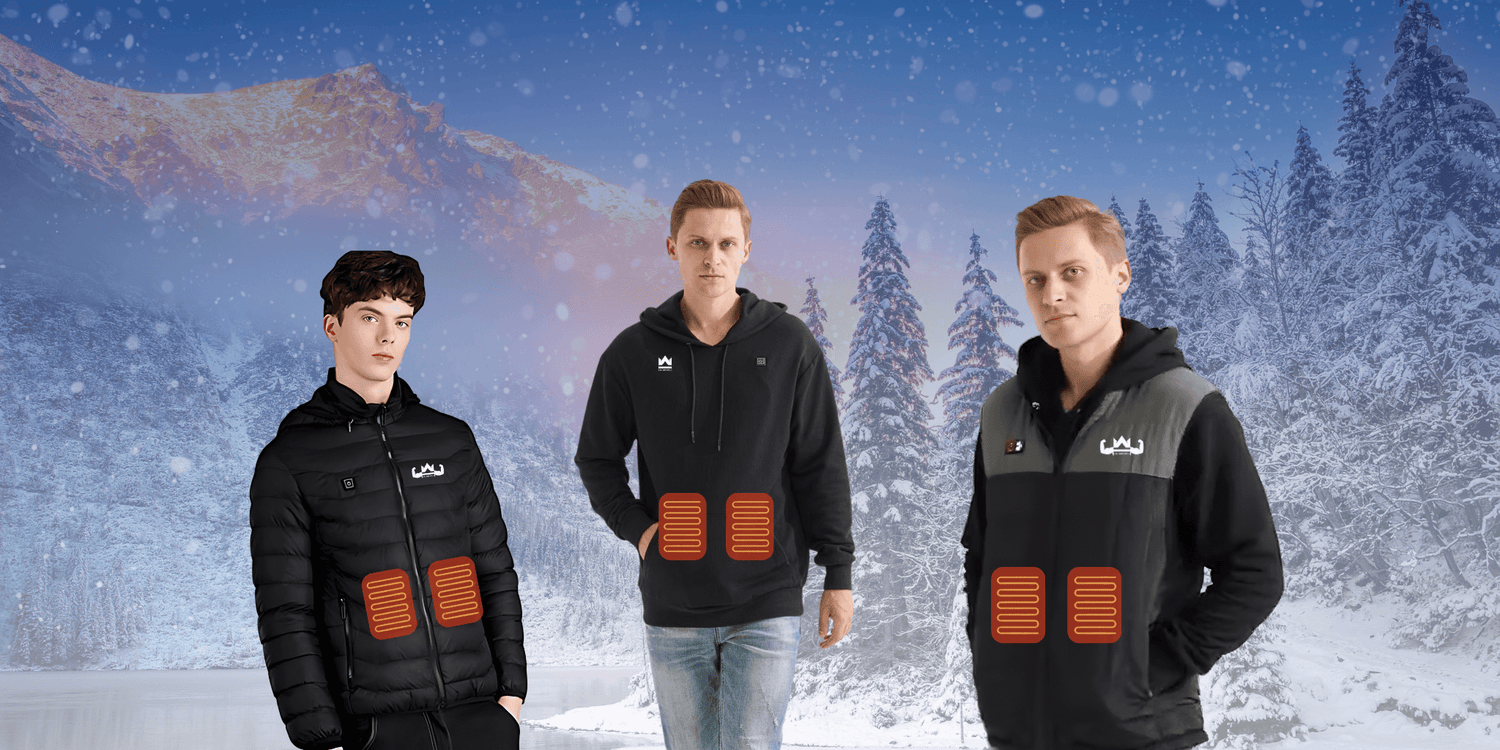
A heated vest, hoodie or jacket contains integrated heating zones powered by a connected power bank. It can be useful during commuting, relaxed rides or frequent stops. Start on a low setting and adjust when conditions change. Heated clothing complements proper winter layers; it does not replace them.
3. Protect hands, feet, head and neck
Choose gloves that provide insulation, wind protection and reliable grip on handlebars and brakes. Wear moisture-managing socks and avoid shoes that are too tight. Overshoes can provide extra protection in wind or rain. A thin cap, helmet liner or balaclava may be worn only when it does not affect helmet fit. A neck warmer can close the gap between jacket and helmet.
4. Match clothing to effort and weather
High-intensity cycling generates more body heat than a quiet ride. Consider temperature, wind, precipitation, speed, duration and stops. A layer that can be opened or removed makes adjustment easier.
5. Prepare your bike and route
Winter roads can be wet, slippery or poorly lit. Check lights and reflective details and adapt speed and route to the conditions. Warm clothing is only one part of winter preparation.
Power bank and care
Charge the power bank before departure and connect it according to the product instructions. Runtime depends on capacity, heat setting, temperature and garment. Disconnect the power bank before washing, follow the care label and inspect cables, connectors and heating zones for visible damage.
Frequently asked questions
Is heated clothing necessary?
No. Good winter layers may be sufficient. Heated clothing is an optional source of adjustable warmth around the upper body.
Which garment works best for cycling?
A heated vest offers freedom of movement under an outer layer. A hoodie or jacket provides more coverage. The best choice depends on weather, ride length and personal preference.
Can it be used in rain?
Moisture protection differs by product. Use a suitable outer layer and follow all instructions for the garment, power bank and connectors.
How long does it stay warm?
Runtime varies by power bank, heat setting, temperature and product. Higher settings generally use more energy. Check the confirmed specifications for your garment.
Conclusion
Comfortable winter cycling starts with moisture management, insulation and protection from wind and rain. Heated clothing can add targeted warmth when used correctly and combined with suitable layers.