

Cold office? Stay warm without a bulky winter coat
Share
In a cold office, thin layers, an easily removable mid-layer and short movement breaks can help you work more comfortably. Check whether draughts or cold air are reaching your workspace directly. This allows you to adjust your clothing throughout the day without having to wear a bulky winter coat indoors.
What helps immediately in a cold office?
Start by identifying the cause of your discomfort, then adjust your clothing or workspace. If only your desk area feels cold, a draught may be responsible. If the entire room is cool, a flexible layering system works better. If you mainly become cold while sitting still, targeted personal warmth may also help.
- Check whether you are sitting beside an external door, window or ventilation grille.
- Wear a breathable base layer that does not feel restrictive.
- Add a cardigan, hoodie or heated vest that you can remove quickly.
- Keep an extra pair of dry socks or a warm scarf at the office.
- Stand up regularly and take a short walk.
- Discuss persistent cold with the person responsible for facilities.
A hot drink may feel pleasant, but it does not warm your workspace. Treat coffee or tea as an addition, not a solution to a consistently cold room.
Which layers should you choose for a cold meeting room?
For a cold meeting room, a combination of three thin, adjustable layers usually works better than one heavy jumper. A layering system is a combination of clothing in which each layer has its own purpose: comfort against the skin, insulation and protection from additional cold or air currents. Find out how to combine heated clothing with your regular winter clothing in our guide to building a smart layering system with heated clothing.
- Base layer: wear a thin, long-sleeved top that feels comfortable against your skin. Choose one that does not pull tightly when you type or write.
- Mid-layer: bring a fine-knit jumper, hoodie or cardigan. This layer should remain comfortable against the back of your chair and be easy to remove.
- Extra layer: wear a heated vest or cardigan if the meeting room is noticeably colder than your usual workspace. A sleeveless option keeps your torso warm without restricting your arms.
For a long meeting, carry a compact extra layer in your bag, even if you do not need it when you set off. A lightweight scarf and warm socks take up little space. Avoid using a thick outdoor coat as your standard indoor layer: it can feel heavy, restrict movement and quickly become too warm when you walk into another room.
When you return to a warmer room, a layer with a zip is more practical than clothing you have to pull over your head.
What should you wear from a cold platform or cycle ride to a warm office?
For your commute, choose an outer layer or mid-layer that you can open and remove as soon as you arrive. This helps prevent you from becoming sweaty in the warm office and then cooling down more quickly later.
| Situation | Practical layer | Adjustment on arrival |
|---|---|---|
| Cold platform and a quiet journey | Zip-up cardigan under a suitable outer layer | Open the zip or remove the cardigan |
| Cycling to the office | Breathable base layer with a loose insulating layer | Remove the outer layer and change damp clothing if necessary |
| Moving frequently between rooms | Heated vest over a thin jumper | Put on or remove the heated vest in each room |
| Sitting still for a long time after arrival | Heated vest or heated bodywarmer | Set the heat level first, then lower it or switch it off later |
The zip-up heated vest is suitable if you frequently move between a cold platform, corridor, meeting room and warm office. Open the zip when you become warmer and remove the vest without disturbing your other layers.
A heated bodywarmer leaves your arms free, making it well suited to typing, presenting and driving. If you prefer more coverage around your arms, the heated hoodie for everyday use is a logical alternative. Choose based on your freedom of movement and changes in temperature, not only on maximum warmth.
What can you do about cold feet and hands at your desk?
Address cold hands and feet first by reducing draughts, contact with cold surfaces and long periods of sitting still. Thick gloves are usually impractical while typing, whereas a few small adjustments will barely interrupt your work.
- Place your feet fully on a dry surface or footrest, rather than against a cold metal cabinet.
- Wear dry socks and shoes with enough room. Shoes that are too tight make extra socks uncomfortable.
- Move your keyboard and mouse if cold air from a ventilation grille is flowing over your hands.
- Open and close your hands during a short break, and briefly walk to the printer or kitchen.
- Warm your hands briefly around a warm mug, without holding hot objects directly against your skin.
Extra warmth around your torso can improve overall comfort, but it does not guarantee warm fingers or toes. With localised cold, it remains important to identify the direct cause. You can also read the practical guide to cold hands, cold feet and warmth around the torso.
When is heated clothing suitable for working in a cool office?
Heated clothing is particularly suitable when you sit still for long periods, rooms differ considerably in temperature or ordinary layers are not adjustable enough. It provides personal warmth and is not a substitute for a suitable working environment, an investigation into draughts or prescribed personal protective equipment.
All KingsPower heated products have three heat settings of 45, 55 and 65 °C. With the supplied power bank, the operating time is approximately 8, 6 or 4 hours, depending on the selected setting, the conditions and the condition of the power bank. Start at a low setting and adjust it whenever you move between rooms.
Heated clothing is not always the right choice. For a short stay in a cool room, an ordinary cardigan is often simpler. You must also be able to wear the product according to the instructions for use and connect it safely. Never use heated clothing at work instead of prescribed personal protective equipment or a risk assessment.
If you are considering personal warmth to avoid heating the entire room further, you can find more context in the article about personal warmth and energy use. Any effects depend on the building, the heating system, how it is used and workplace arrangements. No fixed energy or financial saving can therefore be promised.
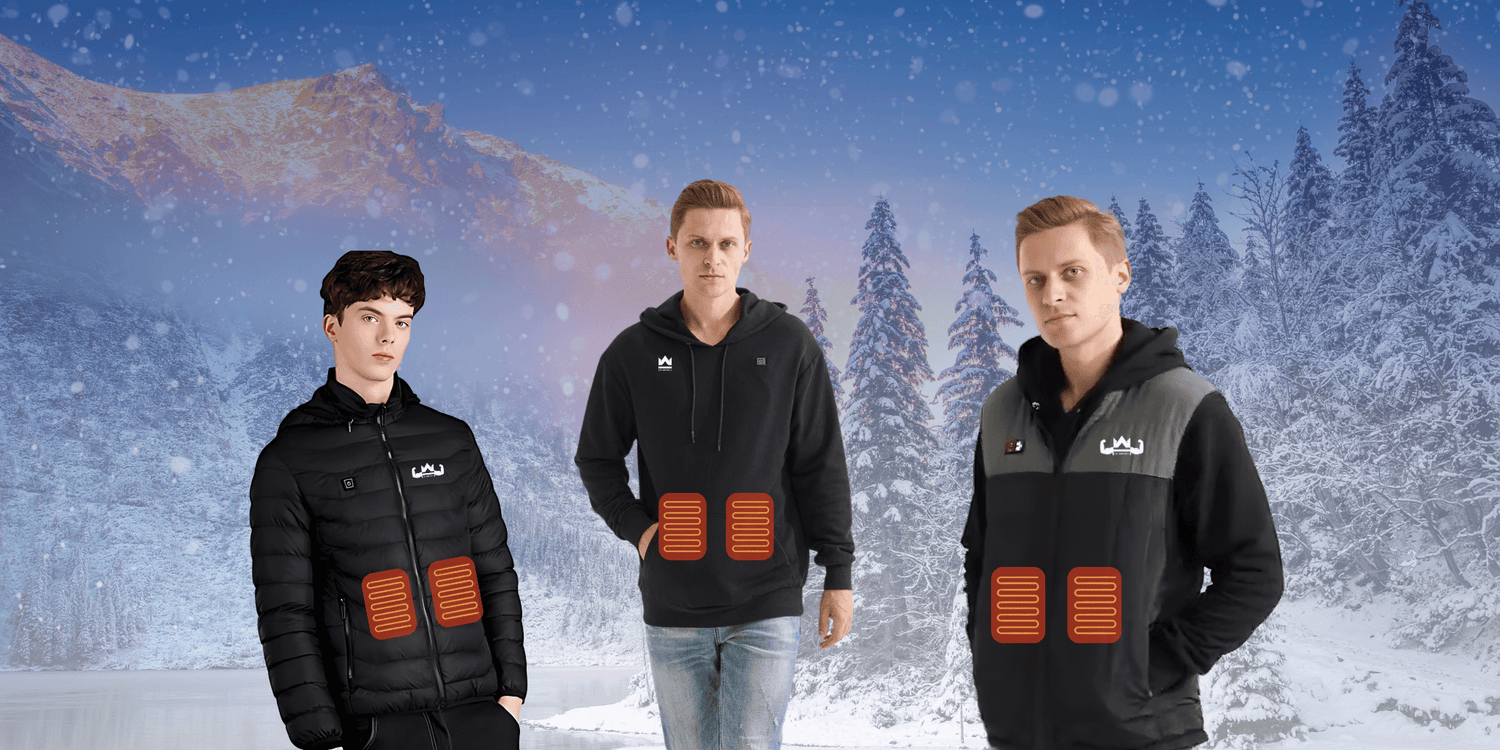
Compare the zip-up heated vest, the heated hoodie and the heated bodywarmers for women and men primarily by fit, freedom of movement and how quickly you can adjust the layer during your working day.
What can employers do about a cold office?
Employers and facilities managers can first establish where and when employees feel cold. An average room temperature does not show whether one desk is in an air current or whether a meeting room is only cold early in the morning.
- Record the room, time and workspace where complaints arise.
- Check doors, windows, blinds, ventilation grilles and the positioning of desks.
- Check whether systems are operating according to the configured times and zones.
- Move a workspace if a local air current cannot be resolved quickly.
- Set clear arrangements for reporting and following up on persistent cold.
Allow for differences between people and types of work. Someone who sits at a screen for long periods may experience a room differently from a colleague who walks around frequently. A practical trial with a different seat or adjusted airflow often provides more information than discussing the thermostat alone.
For teams considering personal warmth as an additional option, a business quotation for heated clothing is available for orders of ten or more items. Assess the work, dress requirements and safety rules beforehand. Personal warmth must not conceal a building problem or a necessary workplace adjustment.
Frequently asked questions
How do you stay warm in a cold office?
Wear a thin base layer, a jumper or hoodie and an outer layer that is easy to remove. Also check for draughts, move briefly between tasks and discuss persistent cold with the facilities team. Heated clothing can provide additional personal warmth, but it does not solve a structural problem with the workspace.
What should you wear if a meeting room might be cold?
Choose a long-sleeved top, a thin jumper and a cardigan or heated vest as a removable third layer. You could also bring warm socks and a lightweight scarf. Avoid one very thick layer, as it is harder to adjust precisely if the meeting becomes warmer or you move to another room afterwards.
Which coat remains comfortable from a cold platform to a warm office?
A heavy winter coat is comfortable outdoors, but usually too warm at a desk. Wear a loose zip-up mid-layer or heated vest underneath. When you arrive, remove the outer coat and open or remove the mid-layer. This allows you to adjust your clothing without changing your entire outfit.
Can heated clothing replace office heating?
No, heated clothing provides localised personal warmth and does not replace a suitable working environment. It may be useful for individual differences or temporary changes in temperature. If cold persists, the temperature, draughts, ventilation and workspace must be investigated. For work subject to clothing requirements, the risk assessment and prescribed personal protective equipment remain decisive.